
Young people are often the closest to the realities shaping their communities. They move through the streets, the schools, and public spaces every day. They see what works and notice what doesn’t, but they are rarely part of the decisions that shape those spaces.
Research from the Search Institute and CIRCLE at Tufts University shows that when young people are given opportunities to contribute to their communities, they build confidence, develop leadership skills, and are more likely to stay civically engaged as adults.¹ When young people are meaningfully engaged in civic life, communities see stronger outcomes from increased civic participation to more responsive and sustainable solutions, in part due to the unique mindset that develops with every new generation. And yet, in most places, the youth viewpoint is treated as an afterthought rather than an asset, or worse, their voices are left out of the process entirely. What they don’t always have is a way to participate, to speak, and to shape what happens next.
In Houston’s East End, where growth and change are happening quickly, a longer table is being built to invite the youth voice into the conversation.
LISC Houston and the East End District created the Youth Leadership Academy, a program focused on creating a real entry point for young people to participate in shaping their community. Not in theory, and not in the future, but now.
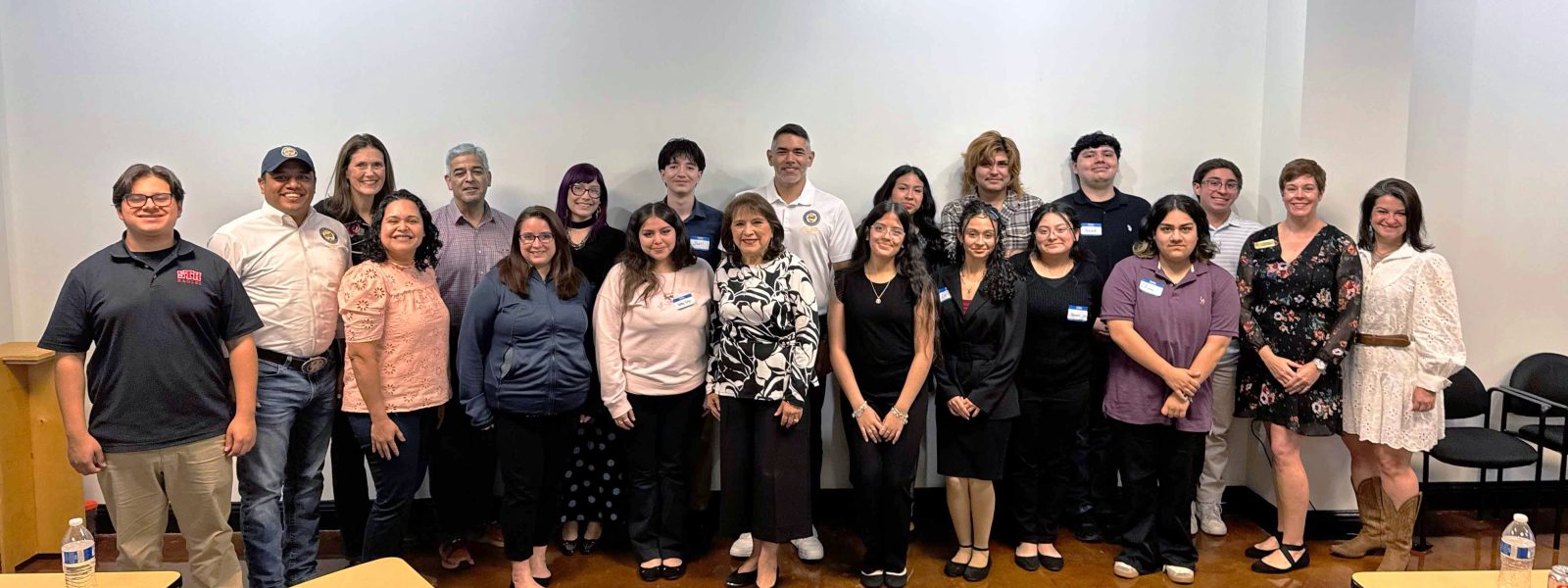
Instead of talking about leadership, the Academy gave them a chance to practice it. Over two Saturdays in February, a group of 13 young people, ages 16 to 19, most of them from the East End, stepped into that role. The composition of the group itself says a lot: Twelve of the thirteen participants identified as Hispanic or Latino, reflecting the community they come from. Most were 16 or 17, at a stage where confidence and identity are still forming, and the majority were young women. None of that was by accident. If leadership is going to look different in the future, it must start here. The group was small, but that worked in its favor by creating space to build trust, test ideas, and to speak up without getting lost in a crowd. This program felt a lot like the East End itself–something built from the ground up by the people who are the most invested in the outcome.
What we learned is that participants already had a strong sense of how change happens in their communities. They were comfortable working in teams. These weren’t disconnected or disengaged youth, but they lacked confidence. Many did not yet feel comfortable using their voice or that their voice belonged in the room, even though they know that their opinions and ideas matter. The gap between understanding and expression is where a lot of young people get stuck. The program focused on that gap.
Participants learned how local government works in ways that connected to their daily lives. They worked together to identify community issues they experience firsthand and applied this work to the Harrisburg Hike and Bike Trail. Participants walked and biked the trail, paying attention to safety, access, and how the space is used. They documented what they saw and organized their observations into recommendations. They developed ideas and prepared to present those ideas to a mock city council to prepare for future presentations at real city council sessions.
On the second Saturday, participants presented their ideas in a mock city council session.
Thank you to Council Members Joaquin Martinez, Mario Castillo, Julian Ramirez, and Sallie Alcorn; TIRZ 23 Board President Estella Gonzalez; East End District Board Member Margie Pena; and Super Neighborhoods 64 and 88 President Lindsay Williams for showing up, listening, and engaging with the students. Their presence created a space where young people were taken seriously and could see how their ideas are received.
Their recommendations were centered around:
- Landscape maintenance and trail access points
- Road crossings and intersection safety
- Sidewalk conditions and connectivity
- Public art and visual improvements
- Lighting and crosswalk visibility
- Amenities and usability of the space
- Drainage, erosion, and environmental conditions
- Cleanliness and trash management
These recommendations were married with specific ideas and solutions they put forth which reflected their direct observations and desire for how they wish to experience their lived environment. Several of the recommendations may inform future planning discussions and have the potential to be considered for implementation through the East End District’s infrastructure committee.
What was even more profound is that by the end of the second day, you could feel a shift. Participants spoke up, shared their ideas, and engaged in discussion. The hesitation that was present at the beginning became less visible. Confidence became more consistent across the group. Students described feeling more comfortable using their voice and more prepared to advocate for themselves and others. That change may seem small from the outside, but it is not.
A primary goal of this program was to create pathways for participants to become engaged with their community. Partnerships were created with East End Communities, Fit Houston, Magnolia Park Arts & Community, the Student Conservation Association, Super Neighborhood 64 & 88, and Council Member Joaquin Martinez’ office is offering a summer internship to one participant.
The ability to speak, to contribute, and to see yourself as someone whose voice matters is where leadership begins. It develops over time through experience and this program provided that experience.
The takeaway from our work with this initial cohort is straightforward. Young people do not need to be convinced that their community matters. They already know that. What they need are opportunities to participate in shaping it. In a place like the East End, where decisions made today will define the future of the neighborhood, creating those opportunities is necessary. Efforts like this move our communities one step closer in that direction.
Footnote
¹ Search Institute. Developmental Relationships Framework and youth voice research; and CIRCLE at Tufts University. Youth civic engagement research on early participation and long-term outcomes.
Additional Data »